
Will a Heat Pump Water Heater Work in Your Colorado Basement?
Published October 8, 2026. Added to our weekly archive for the date shown above. Guidance and sources were checked at publication.
Check whether your Colorado basement suits a heat pump water heater, including airflow, winter temperature, hot-water demand, noise, drainage, and electrical work.
A heat pump water heater can suit a Colorado basement if the location provides the model's required air supply, operating temperature, service clearance, drainage, and electrical connection. The tank fitting in the old space is only the first check. Hot-water demand and the effect on the surrounding room matter too.
If your water heater is approaching replacement, evaluate the room before choosing a model or counting on a rebate. Planning ahead gives you time to compare a conventional replacement with a heat pump installation rather than making the entire decision during a no-hot-water emergency.
For homes along Colorado's Northern Front Range, the key distinction is between a basement that stays suitable through winter and a cramped or cold utility space that needs a different installation approach.
How does a heat pump water heater change the room around it?
Instead of relying only on electric resistance or a gas burner, a heat pump water heater moves heat from surrounding air into stored water. Integrated models have a compressor and fan as well as a storage tank. Some also use electric resistance elements under particular operating modes or conditions.
ENERGY STAR's consumer guide notes that these units can cool the surrounding space and operate less efficiently in colder locations. Think of the room as part of the system, not simply somewhere to hide the tank.
In a utility room, that cooling may be acceptable. Beside a basement bedroom or home office, the sound and cooler exhaust could affect comfort. A proposal should acknowledge where the air comes from and where it goes.
Is there a universal minimum room size?
No. Use the exact model's installation manual. Manufacturer requirements and approved ducting or grille arrangements vary.
ENERGY STAR's design guidance describes model requirements that can differ substantially. Its broad consumer guidance and its detailed installation guidance use different example volumes. Neither should be turned into a single rule for every product.
Measure length, width, and ceiling height, then identify whether the space is actually open to adjoining areas. A finished closet with a solid door is not automatically equivalent to the larger basement outside it. A door being open during the estimate does not prove it will provide the required air after installation.
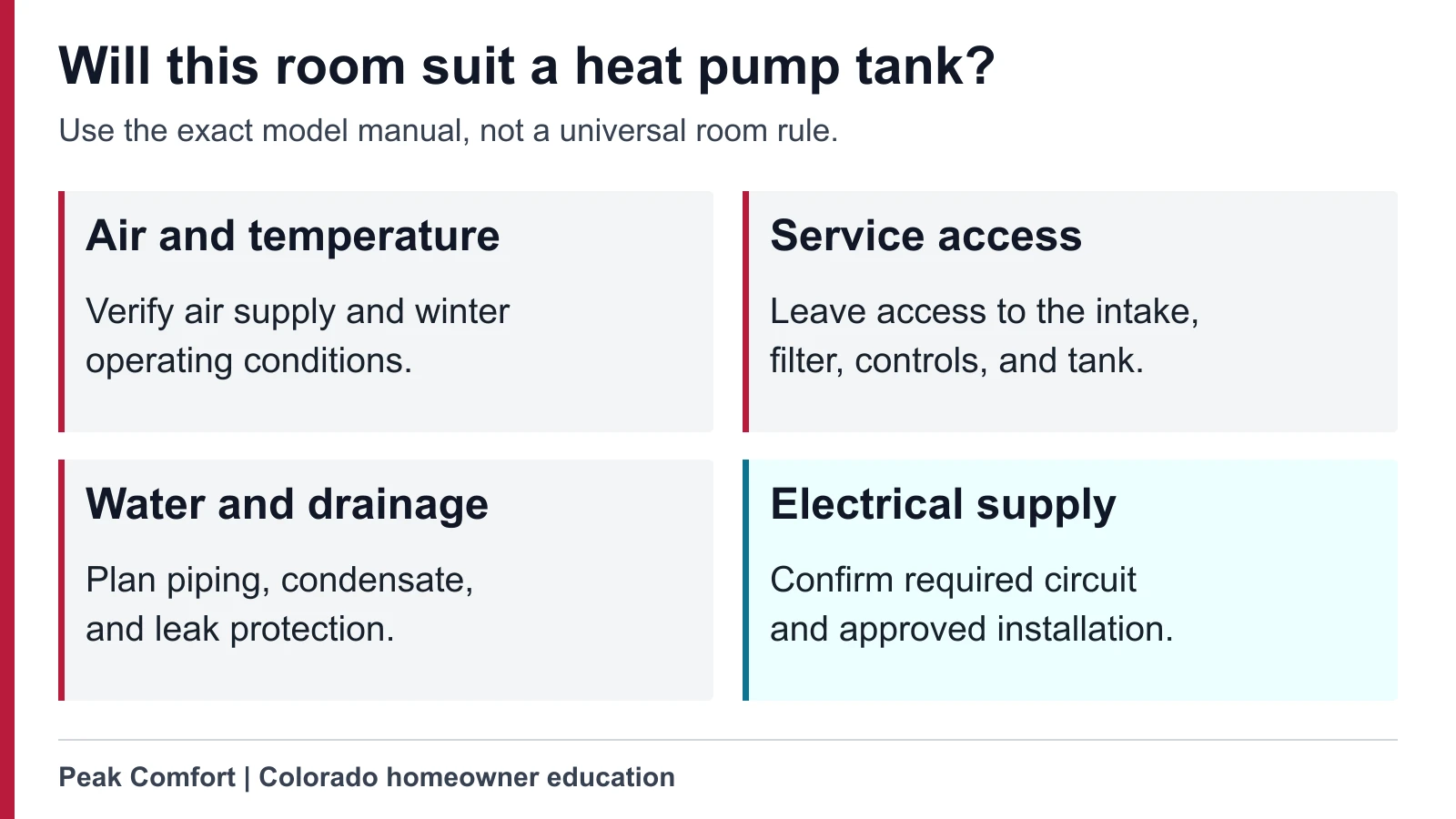
Ask the contractor to identify the manual's requirement and the proposed way of meeting it. If ducting or a transfer grille is part of that answer, get it included in the scope and ask about its effect on noise and room temperature.
Which basement conditions deserve closer review?
| Location | What makes it worth considering | What needs verification |
|---|---|---|
| Large open basement utility area | Space for air circulation and service | Winter temperature and nearby occupied rooms |
| Enclosed mechanical closet | Equipment can be kept out of living space | Model-approved air openings or ducting |
| Basement next to a bedroom | Convenient existing plumbing location | Sound, vibration, and cool exhaust direction |
| Unheated garage or exterior room | Sometimes has generous physical space | Cold-weather operating limits and freeze risk |
| Room shared with combustion equipment | Existing utility connections may be nearby | Safe ventilation and the complete equipment arrangement |
The table helps identify questions. It does not approve a location. Colorado homes differ, and an unfinished room's winter conditions can be very different from those seen on a warm September afternoon.
Do not remove combustion-air provisions or cap an existing vent yourself. If replacing gas equipment, the qualified installer must address the remaining fuel, venting, and other appliance requirements as part of the project.
How much hot water does your household actually need?
Describe the busiest period, not just the number of residents. Two showers followed by laundry and a dishwasher create a different demand pattern from the same uses spread throughout the day.
Ask the contractor to compare first-hour rating, tank size, recovery expectations, and the operating modes of the proposed product. A larger tank can sometimes be useful, but it must still fit the location and installation requirements.
Write a short usage example before the estimate: when showers occur, whether a large tub is used, and which appliances run at the same time. This is more useful than assuming the old tank's capacity is automatically the correct replacement size.
Avoid solving a capacity concern by raising water temperature yourself. Storage temperature, mixing protection, scald risk, and manufacturer guidance need to be considered together by the installer.
What else belongs in the installation quote?
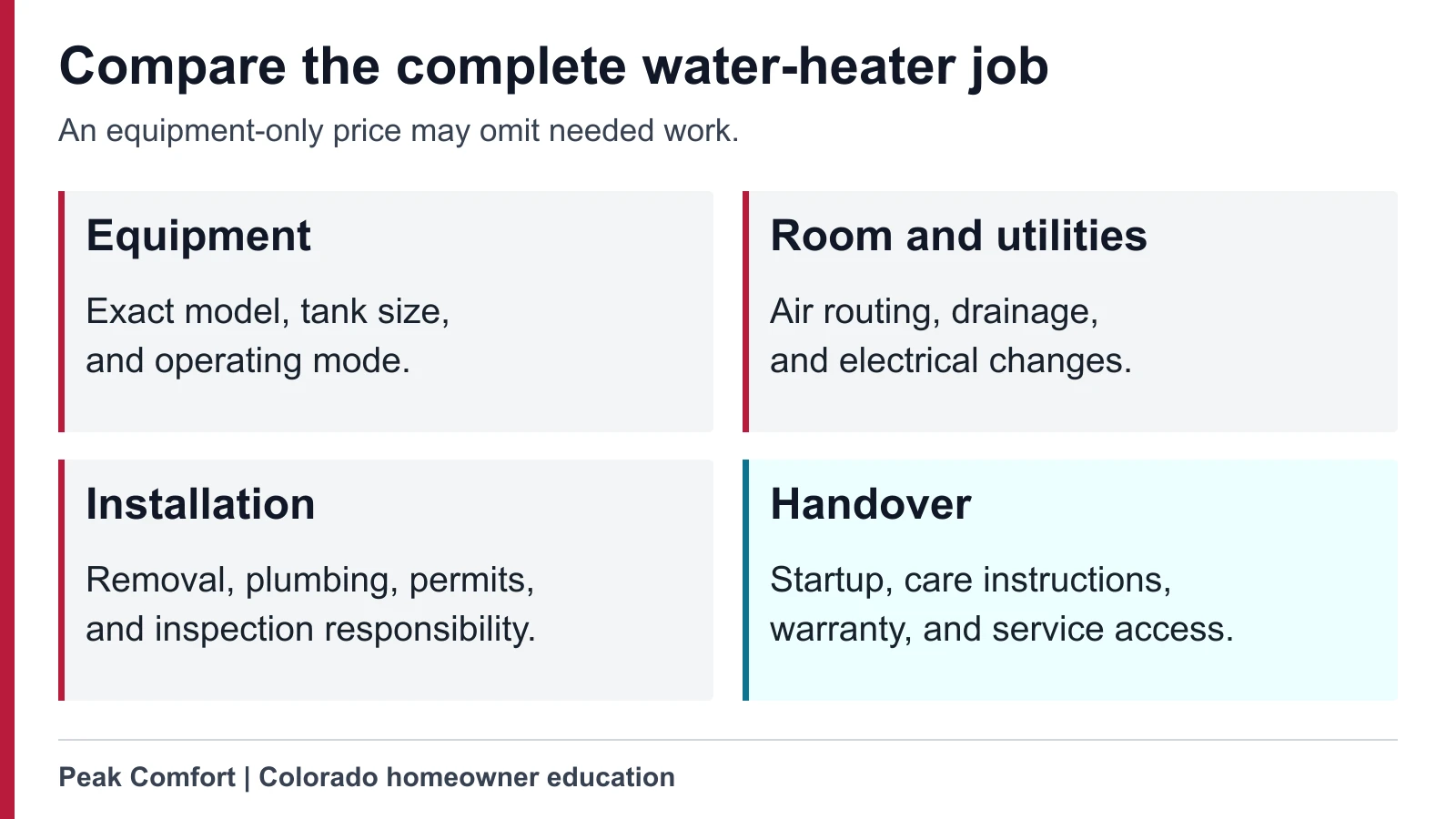
The ENERGY STAR installation guidance addresses access, piping, leak protection, and other installation details. For your quote, make the practical work explicit:
- Removal and disposal of the existing water heater.
- Exact new model, tank size, and intended operating mode.
- Electrical circuit requirements and any separate electrical work.
- Condensate handling, drain pan, and water-leak provisions.
- Air-supply, ducting, or grille work required for the location.
- Plumbing changes and safe treatment of any abandoned gas connection or vent.
- Permit and inspection responsibilities for the local jurisdiction.
- Startup, control explanation, warranty information, and service access.
This is a scope checklist, not a do-it-yourself installation plan. Ask which trades are involved and whether the total includes their work. A low equipment-only figure may not describe the completed installation you need.
How should you evaluate rebates without letting them lead the design?
Verify incentives for your address, utility, existing fuel, product, installation date, and contractor requirements. Program availability and eligibility can change. This article intentionally does not quote a universal rebate or tax-credit amount.
Ask for a written distinction between the installed price and any incentive assumption. Confirm who applies, what documentation is needed, and whether the offer is a discount at installation or money received later.
If a large incentive is the main selling point, return to the room and hot-water checks. An unsuitable location does not become suitable because a rebate looks attractive.
What should you keep accessible after installation?
Keep the air intake, outlet, filter, controls, drain path, and normal service area accessible. Do not gradually fill the planned clear space with storage boxes.
Ask the installer to show you normal sounds, the selected mode, basic maintenance described in the manual, and what an alarm or leak indication requires you to do. Save the model number and documentation with the original quote.
A short handover conversation can prevent avoidable confusion later, particularly when a new system runs differently from the gas tank it replaced.
Questions about heat pump water heaters in Colorado
Can it go in the same closet as my old tank?
Possibly, but physical fit does not establish adequate air supply or service access. The model's approved installation arrangements should decide whether the closet needs changes.
Will it make my whole basement cold?
The unit discharges cooler air, but the effect depends on the room, connected spaces, operating pattern, and air routing. Ask for an explanation specific to your layout rather than a blanket promise.
Is a heat pump water heater the same as a home-heating heat pump?
No. A water heater heats stored domestic water. A space-conditioning heat pump heats and cools rooms. Their installation and performance requirements differ.
Can it replace a gas water heater?
It may be an option, but the project needs a complete review of electrical supply, plumbing, room conditions, and the gas and venting changes. Compare that full scope with other suitable replacements.
Start with the room and the household
The strongest choice is a water heater that fits both the installation conditions and your daily use. A room review and a complete quote are more useful than choosing a model from its rebate headline.
Peak Comfort provides water-heater installation and repair in Colorado's Northern Front Range. Request a water-heater assessment to compare conventional and heat pump options for your basement and household.
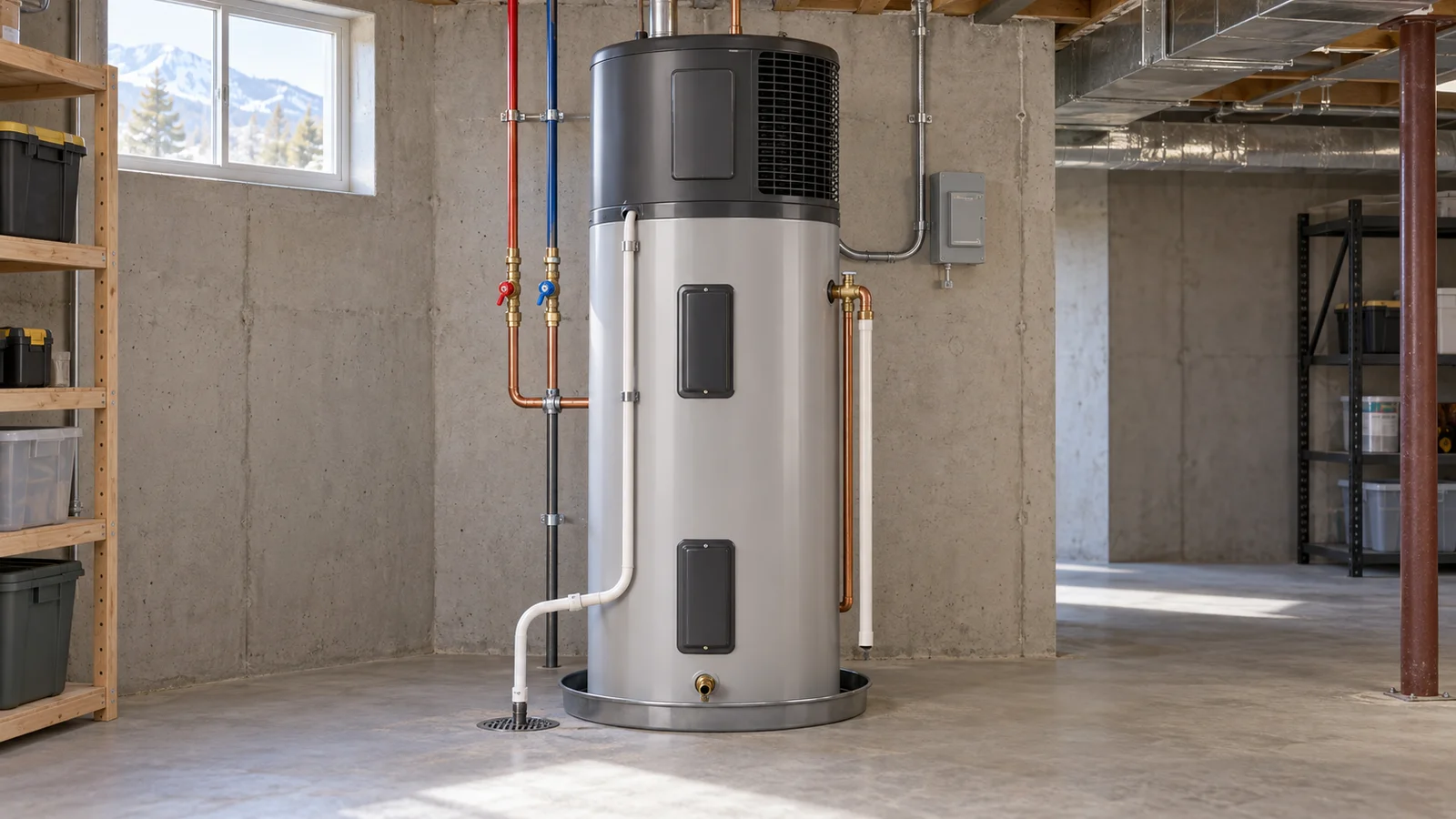
The cover is an original generated illustration, not an installation detail drawing. Follow the selected product's instructions and the qualified installer's design.
About the Author
Morgan Shaffer
Co-Owner and HVAC Specialist, Peak Comfort
Morgan specializes in high-efficiency systems, heat pumps, and field-proven HVAC solutions for Front Range weather.
References
APA style citations for sources used in this article.