
What Size HVAC System Do I Need in Colorado?
Updated October 12, 2026.
Learn why Colorado HVAC sizing should start with a Manual J load calculation, duct and airflow checks, and cold-climate equipment selection instead of square-foot rules.
If you are replacing a furnace, air conditioner, or heat pump in Colorado, one of the first questions is simple: what size HVAC system does this house actually need?
The answer should not come from square footage alone. It should not come from the size of the old unit either. Colorado homes can have the same floor area and still need very different equipment because insulation, windows, ductwork, altitude, sun exposure, and room layout all change the heating and cooling load.
That is why a good HVAC sizing conversation starts with the house, not the box on the old equipment.
Quick Answer
The right HVAC size for a Colorado home is the size that matches the home's measured heating and cooling load, then works with the duct system and equipment performance data.
For most homes, that means three steps:
- A room-by-room Manual J load calculation.
- An airflow and duct check, especially if the home has comfort complaints.
- Equipment selection that matches Colorado heating and cooling conditions.
If a contractor only asks for square footage and tells you the size in tons or BTUs immediately, that is not enough information for a careful replacement plan.
Why Square Footage Rules Do Not Work Well Here
Square footage is a useful starting point, but it is not a sizing method.
A 2,000 square foot ranch in Longmont may have a different load than a 2,000 square foot two-story home in Fort Collins. A shaded older home in Boulder may behave differently than a newer home in Loveland with large west-facing windows. A foothills home can also see different wind, snow, and temperature conditions than a house closer to the plains.
The equipment does not heat or cool square footage. It offsets heat loss and heat gain.
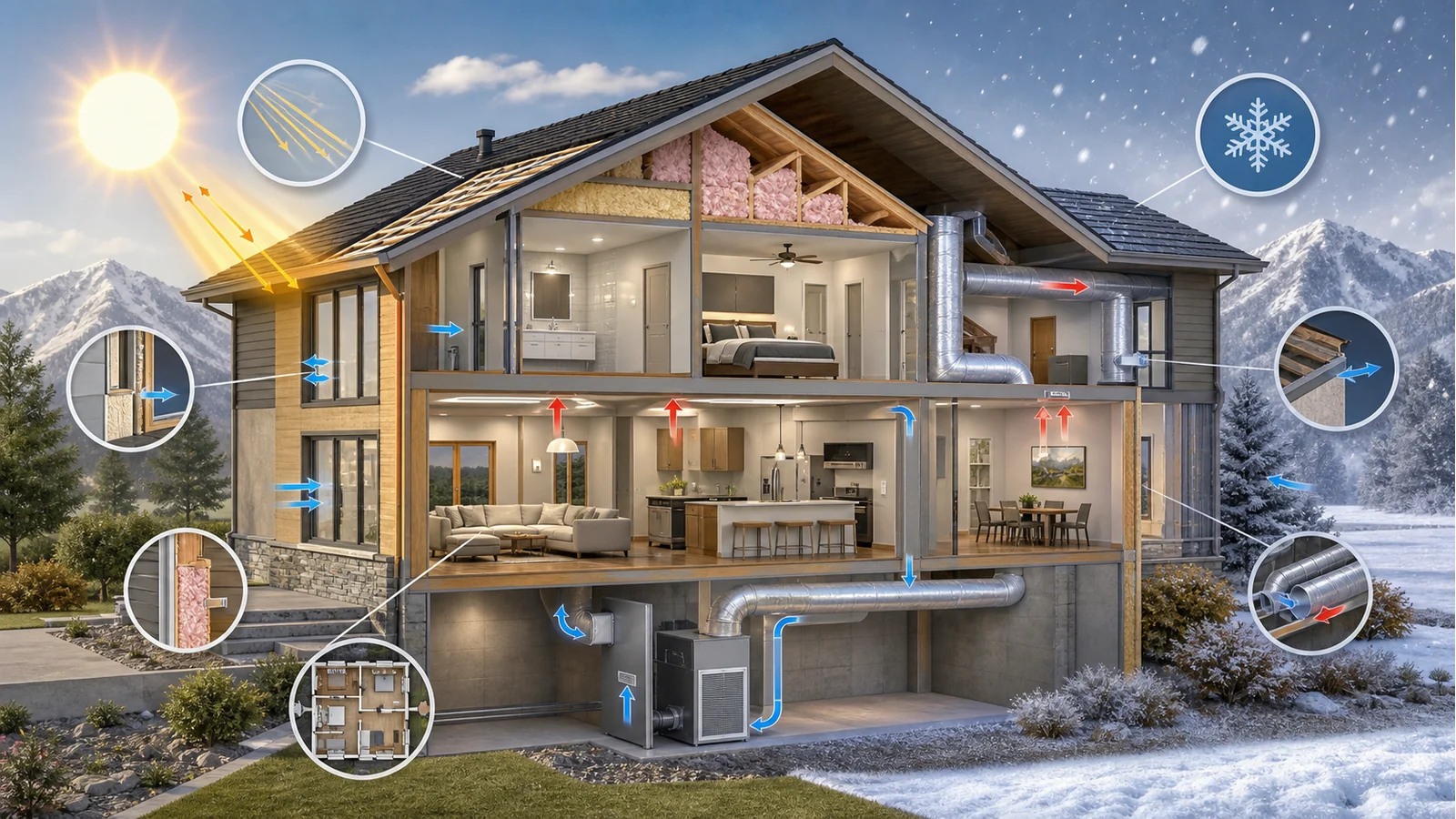
That load is affected by:
- Insulation levels in walls, ceilings, and floors
- Window size, direction, glass type, and shading
- Air leakage through the building shell
- Ceiling height and open stairways
- Duct location, leakage, and restriction
- Room-by-room exposure to sun and wind
- The number of people and heat-producing appliances
- Whether the system is a furnace, central AC, heat pump, or dual-fuel setup
ACCA identifies Manual J as the national ANSI-recognized standard for producing residential HVAC equipment sizing loads. That matters because a real load calculation looks at the house as a system instead of guessing from a rule of thumb.
What Happens When HVAC Equipment Is Too Big?
Bigger is not automatically better.
An oversized air conditioner can cool the thermostat quickly but run in short cycles. That can leave some rooms uncomfortable, increase wear on equipment, and make temperature swings more noticeable. ENERGY STAR warns homeowners that installing the right size equipment is essential and that many people incorrectly assume bigger equipment is always better.
Oversizing can also make existing duct problems louder. If a blower is trying to move more air than the duct system can handle, the result may be noisy vents, weak airflow in distant rooms, high static pressure, or uneven comfort.
For Colorado homeowners, oversizing is often most noticeable during shoulder seasons. The system starts, satisfies the thermostat too quickly, shuts off, then repeats. The house never feels settled.
What Happens When HVAC Equipment Is Too Small?
Undersizing has a different problem: the system may run constantly and still not keep up.
In winter, an undersized furnace or heat pump may struggle during cold nights. In summer, an undersized AC may fall behind during late afternoon heat, especially in rooms with west-facing glass or weak airflow.
With heat pumps, sizing gets more nuanced. The U.S. Department of Energy notes that modern air-source heat pumps can be viable in regions with extended subfreezing weather, but selection and installation details still matter. For Colorado homes, the contractor needs to look at heating capacity at low outdoor temperatures, not just cooling tonnage.
That does not mean every home needs the largest cold-climate heat pump available. It means the equipment should be selected for the load and the comfort strategy.
What a Good HVAC Size Check Should Include
A good replacement visit should feel more like a diagnosis than a sales shortcut.
The contractor should be able to explain what they are checking and why it matters. You do not need to become an engineer, but you should hear more than "your house is about 2,000 square feet, so you need this size."
At a minimum, ask how the company handles:
- Manual J heating and cooling load calculations
- Existing duct size and condition
- Static pressure or airflow concerns
- Return air capacity
- Rooms that are too hot or too cold
- Window exposure and insulation changes
- Heat pump low-temperature capacity, if you are considering a heat pump
- Backup heat strategy, if needed
- Equipment matchups and warranty requirements
This is especially important if the old system never worked well. Replacing a poorly matched system with the same size can repeat the same comfort problem for another decade.
Why Ductwork Can Change the Right Answer
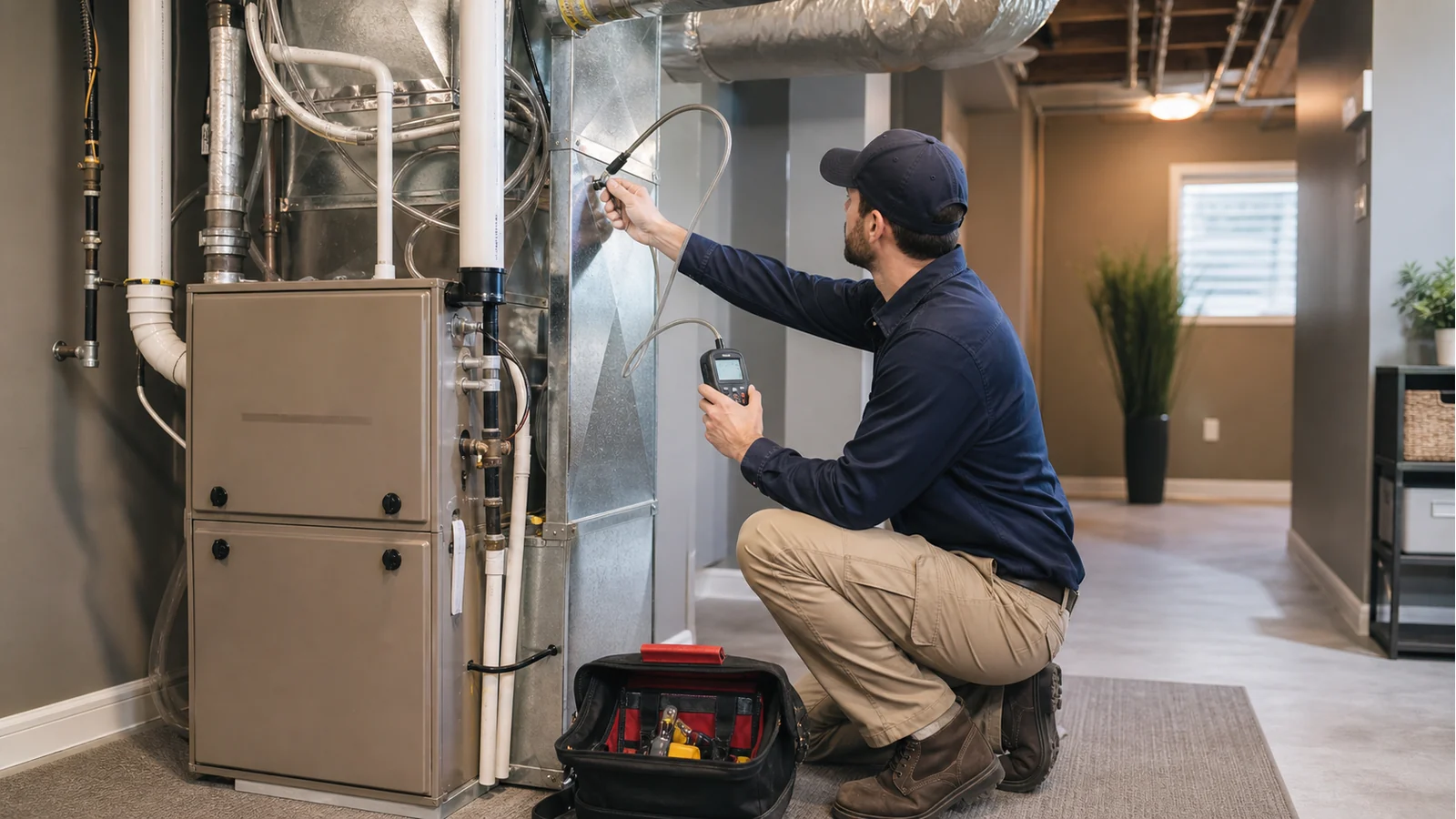
The equipment size is only part of the comfort equation. The duct system has to deliver the air.
The Department of Energy says ducts that are poorly sealed or insulated can contribute to higher energy bills, and that existing ducts may be blocked or may need simple upgrades. DOE also notes that efficiency and performance can deteriorate when heat pump airflow is much less than 350 cfm per ton.
That is why a duct check matters before a replacement.
If the ducts are undersized, restricted, leaky, or poorly balanced, a larger unit may not solve the problem. It may make the system louder and harder on the blower. ACCA's Manual D covers residential duct design principles, including duct airflow, blower airflow, and how the duct system interacts with the equipment.
In plain language: the right-size unit still needs a path to move the right amount of air.
Colorado Factors That Change HVAC Sizing
Colorado homes ask a lot from HVAC equipment.
On the Front Range, a system may need to handle sunny winter afternoons, cold overnight temperatures, dry summer heat, smoky outdoor air events, and large room-to-room differences from sun exposure. A south-facing room can feel fine in January and too warm in July. A basement can stay cool while the second floor overheats.
These local factors do not always change the equipment size by themselves, but they do change the questions a contractor should ask.
Altitude and airflow
At higher elevations, equipment setup and airflow checks matter. The blower, duct system, refrigerant charge, combustion setup for gas equipment, and manufacturer specifications all need to be respected. This is one reason field measurements matter after installation.
Solar gain
Large west-facing windows can add a real cooling load late in the day. Shade, window coverings, glass type, and room orientation all affect how the home behaves.
Cold-weather heat pump performance
If you are choosing a heat pump, ask how the proposed model performs in cold weather. DOE notes that cold climate heat pumps are designed to perform at temperatures as low as 5 degrees F. In Colorado, the question is not simply whether heat pumps work. The question is whether this heat pump is sized and configured for this house.
Existing comfort complaints
Rooms over garages, upper floors, additions, finished basements, and sunrooms often need extra attention. The answer might be duct balancing, duct repair, zoning, a ductless mini split, or a different equipment strategy.
Should You Match the Size of the Old Furnace or AC?
Sometimes the old size is a clue. It is not proof.
The old system may have been oversized from the start. The home may have changed since it was installed. Windows may have been replaced, insulation may have improved, an addition may have been finished, or the duct system may have been altered.
Matching the old equipment can be reasonable only after the contractor confirms that it matches the current load and airflow needs.
Ask this question:
"What makes this the right size for my current home, not just the same size as the old unit?"
A good answer should reference the load, the ducts, the comfort complaints, and the proposed equipment's performance.
Furnace Size, AC Size, and Heat Pump Size Are Not the Same Decision
Homeowners often hear three different sizing languages:
- Furnaces are commonly discussed in BTUs.
- Central AC systems are commonly discussed in tons.
- Heat pumps may need both cooling capacity and low-temperature heating capacity reviewed.
One ton of cooling is not the same thing as one furnace size. A heat pump selected only for summer cooling may not be the best winter heating match. A furnace selected only by input BTUs may not account for efficiency, duct limits, or room-by-room comfort.
That is why replacement planning should connect the load calculation to the actual equipment selection.
Questions to Ask Before You Approve a Replacement
Use these questions before signing for a new furnace, AC, or heat pump:
- Did you run a Manual J load calculation or use an equivalent accepted method?
- What heating and cooling load did you calculate?
- How does the proposed equipment match that load?
- Did you check static pressure, return air, and duct capacity?
- Are any rooms likely to remain uncomfortable without duct or zoning work?
- If this is a heat pump, what is the low-temperature capacity?
- What commissioning checks will you perform after installation?
- What would make you recommend a different size?
These questions are not meant to make the conversation adversarial. They help you separate a real system design from a quick replacement quote.
The Bottom Line for Colorado Homes
The best HVAC size is not the biggest unit you can afford. It is the system that fits the home's load, moves air through the ductwork correctly, and matches Colorado weather.
For many homes, the right answer starts with Manual J, then moves to duct and airflow checks, then equipment selection. That approach is more careful than square-foot guessing, and it gives you a better chance at quiet, efficient, even comfort.
Peak Comfort helps Colorado homeowners compare furnace, AC, heat pump, and ductless options with a practical sizing conversation. If your current system short cycles, runs constantly, or leaves certain rooms uncomfortable, the right next step is not guessing at equipment size. It is understanding what the house actually needs.
For a planned replacement, explore our Northern Front Range heat pump installation and repair services or heating services. Request a sizing and replacement assessment to discuss your home's load, distribution system, and proposed equipment.
About the Author
Morgan Shaffer
Co-Owner and HVAC Specialist, Peak Comfort
Morgan specializes in high-efficiency systems, heat pumps, and field-proven HVAC solutions for Front Range weather.
References
APA style citations for sources used in this article.
- Air Conditioning Contractors of America. (n.d.). Manual J residential load calculation. https://www.acca.org/technical-manual/manual-j Source
- Air Conditioning Contractors of America. (n.d.). Manual D residential duct design. https://www.acca.org/technical-manual/manual-d Source
- U.S. Department of Energy. (n.d.). Air-source heat pumps. https://www.energy.gov/energysaver/air-source-heat-pumps Source
- U.S. Department of Energy. (n.d.). Minimizing energy losses in ducts. https://www.energy.gov/energysaver/minimizing-energy-losses-ducts Source
- ENERGY STAR. (2009). A guide to energy-efficient heating and cooling. https://www.energystar.gov/sites/default/files/tools/HeatingCoolingGuide%20FINAL_9-4-09.pdf Source