
What Should a Furnace Tune-Up Include in Colorado?
Published October 8, 2026. Added to our weekly archive for the date shown above. Guidance and sources were checked at publication.
Compare Colorado furnace tune-ups by the checks, measurements, and written findings that matter, not just a low price or a long inspection checklist.
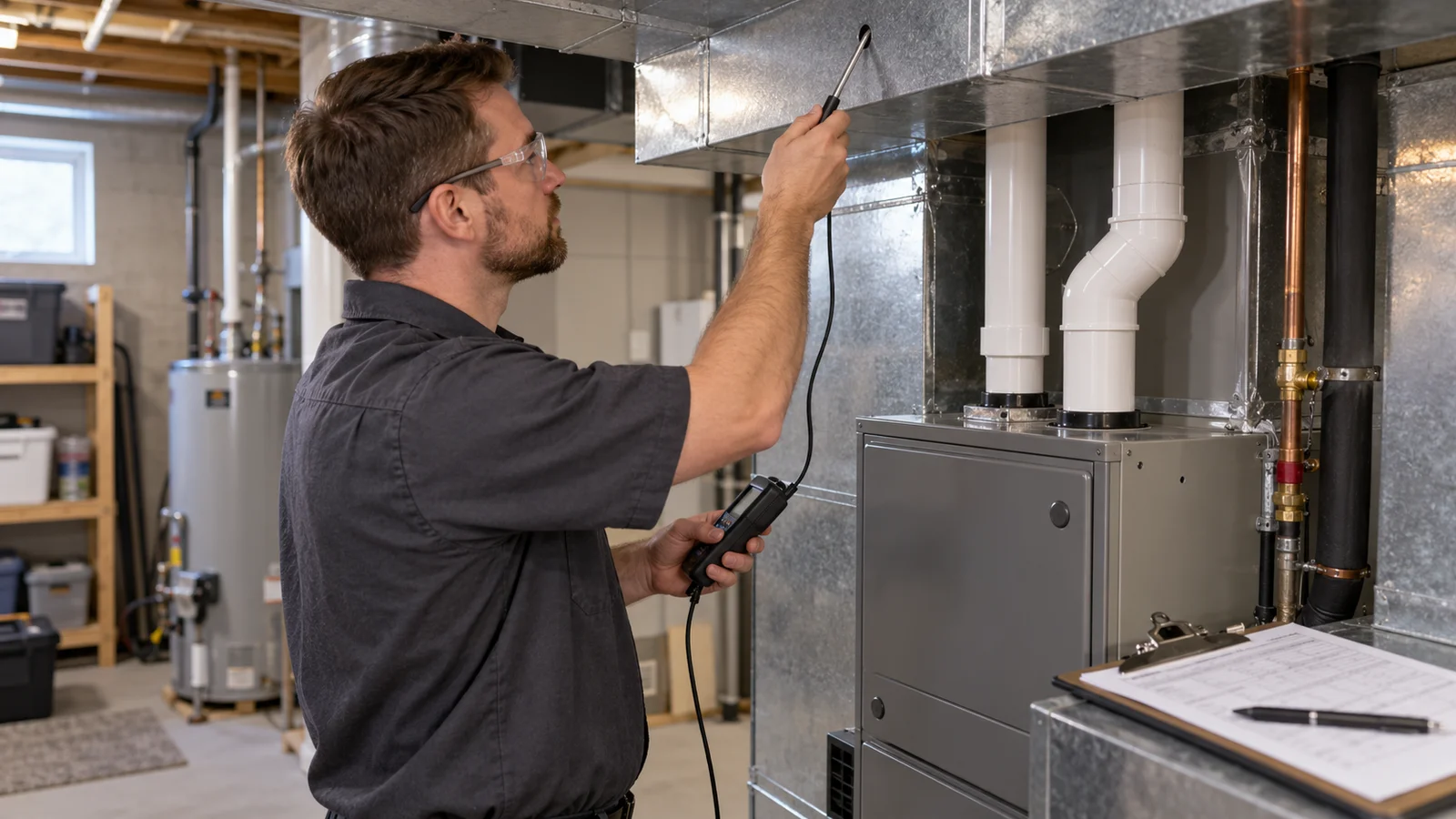
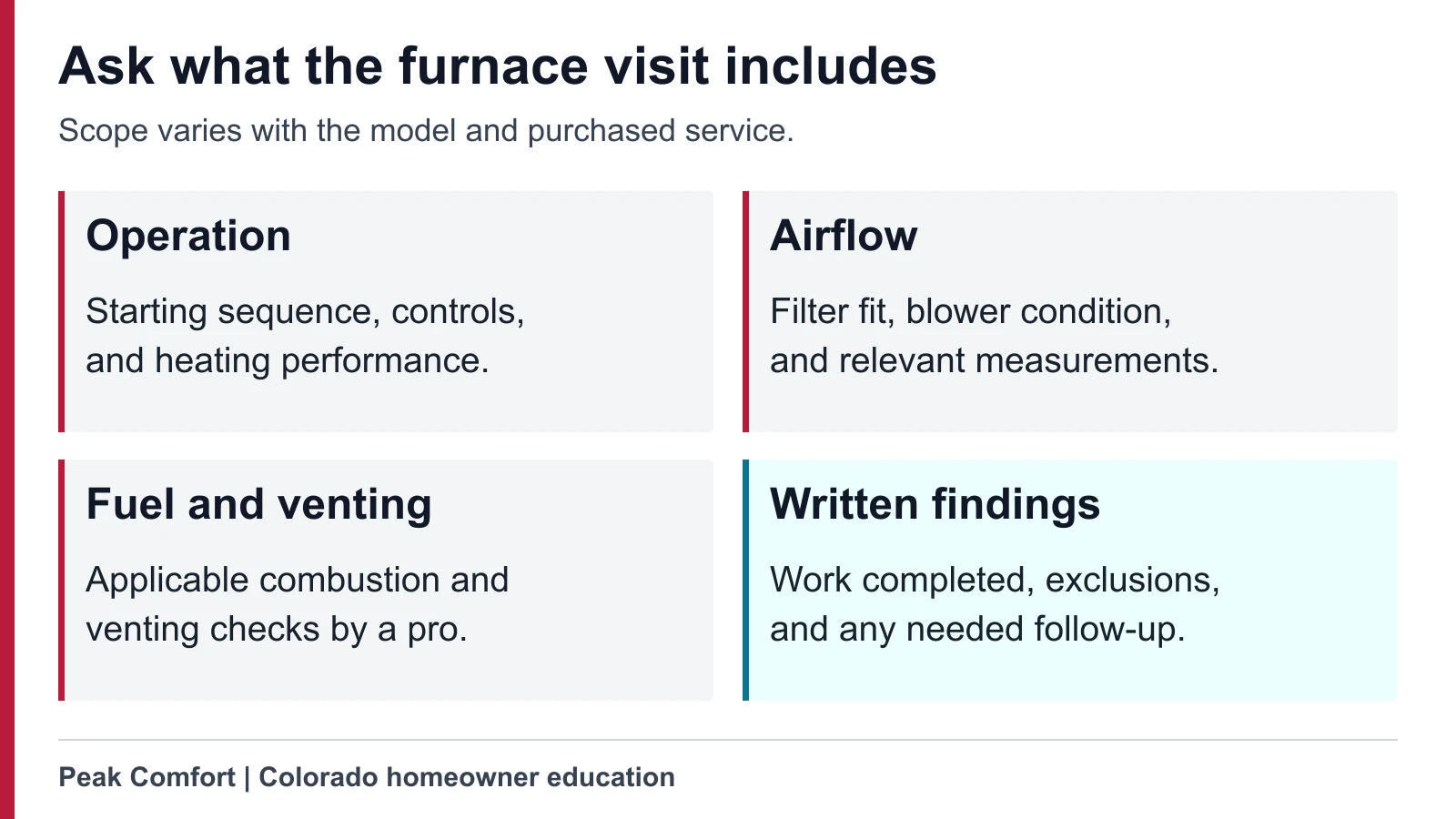
A useful furnace tune-up checks operation, airflow, controls, and equipment condition, with combustion and venting checks appropriate to a fuel-burning furnace. You should receive clear findings, not simply a claim that the unit passed a long checklist. The exact work depends on the model, manufacturer instructions, and the service you purchased.
On Colorado's Northern Front Range, fall is a good time to ask what a heating visit actually includes. An appointment called a tune-up might be preventative maintenance, a limited inspection, or a diagnostic visit for an existing problem. Those are related services, but they are not interchangeable.
This guide helps you compare the scope before booking and understand the report afterward. For the seasonal homeowner tasks between visits, use our HVAC maintenance checklist.
What is the difference between an inspection, tune-up, and repair?
An inspection evaluates condition and operation within a defined scope. A tune-up usually includes maintenance or cleaning as well as checks. A repair addresses a diagnosed fault. Ask the provider what those words mean in its proposal.
For example, a visit can identify a dirty blower without including the labor to remove and clean it. It can identify a drain problem without including a replacement pump. An inspection fee does not necessarily include every corrective part or task.
Before the visit, get answers to three questions: what is included, what could cost extra, and how will approval for additional work be handled? That conversation makes the final invoice easier to understand.
Which checks belong in the conversation?
The ENERGY STAR maintenance checklist identifies controls, electrical connections, drainage, airflow-related maintenance, and heating-specific gas, combustion, and heat-exchanger checks. Carrier's furnace-service guidance also includes filtration, operating temperatures, the blower, fuel supply, and venting.
Use those sources to ask about the scope for your furnace. They are not a substitute for the unit's service instructions, and this table is not a promise that every appointment includes every task.
| Area to discuss | What you want explained | A useful report question |
|---|---|---|
| Starting and stopping | Whether the sequence operates as intended | Did you observe a full heating cycle? |
| Filter and airflow | Correct filter, restrictions, and blower operation | Did you find a restriction or measure a concern? |
| Heating performance | Supply and return temperatures compared with specifications | What were the readings and allowed range? |
| Fuel-burning components | Condition, combustion, and fuel checks as applicable | What was checked and what needs follow-up? |
| Venting and drainage | Visible condition and appropriate operation | Were any inaccessible areas excluded? |
| Electrical and controls | Connections, faults, and safety controls | Were any active or stored faults found? |
Why do measurements matter more than a checklist count?
A checklist can be useful, but the number of points does not tell you how thoroughly a problem was evaluated. A report that says "airflow checked" leaves more uncertainty than one that explains the observation or measurement and its relevance.
Ask the technician to distinguish a visual observation from a measured result. Also ask which manufacturer specification applies. There is no single temperature-rise range or gas-pressure setting that fits every Colorado furnace.
Altitude-related requirements are another reason to use the exact model's instructions. The contractor should verify the installation's requirements rather than apply a generic setting because the house is in Colorado. Homeowners should not adjust combustion components themselves.
A good explanation can be brief: what was observed, why it matters, and what action is recommended. The aim is a clear decision, not a folder of numbers you cannot interpret.
How should you prepare for the appointment?
Make the equipment and the history accessible. Clear the normal service area without moving gas lines, disconnecting wiring, or removing cabinet panels. Keep pets away from the work area and have access to the thermostat.
Write down issues that do not happen on demand: a noise at the first morning start, a room that never catches up, or a furnace that shuts off before reaching the setpoint. Note when the pattern began and whether the filter, thermostat, or house changed around that time.
Bring prior reports if you have them. An unresolved finding from last year is useful context even if the equipment still produces heat. If you recently added insulation or remodeled rooms, mention that as part of the home's operating history.
Which findings should change your next step?
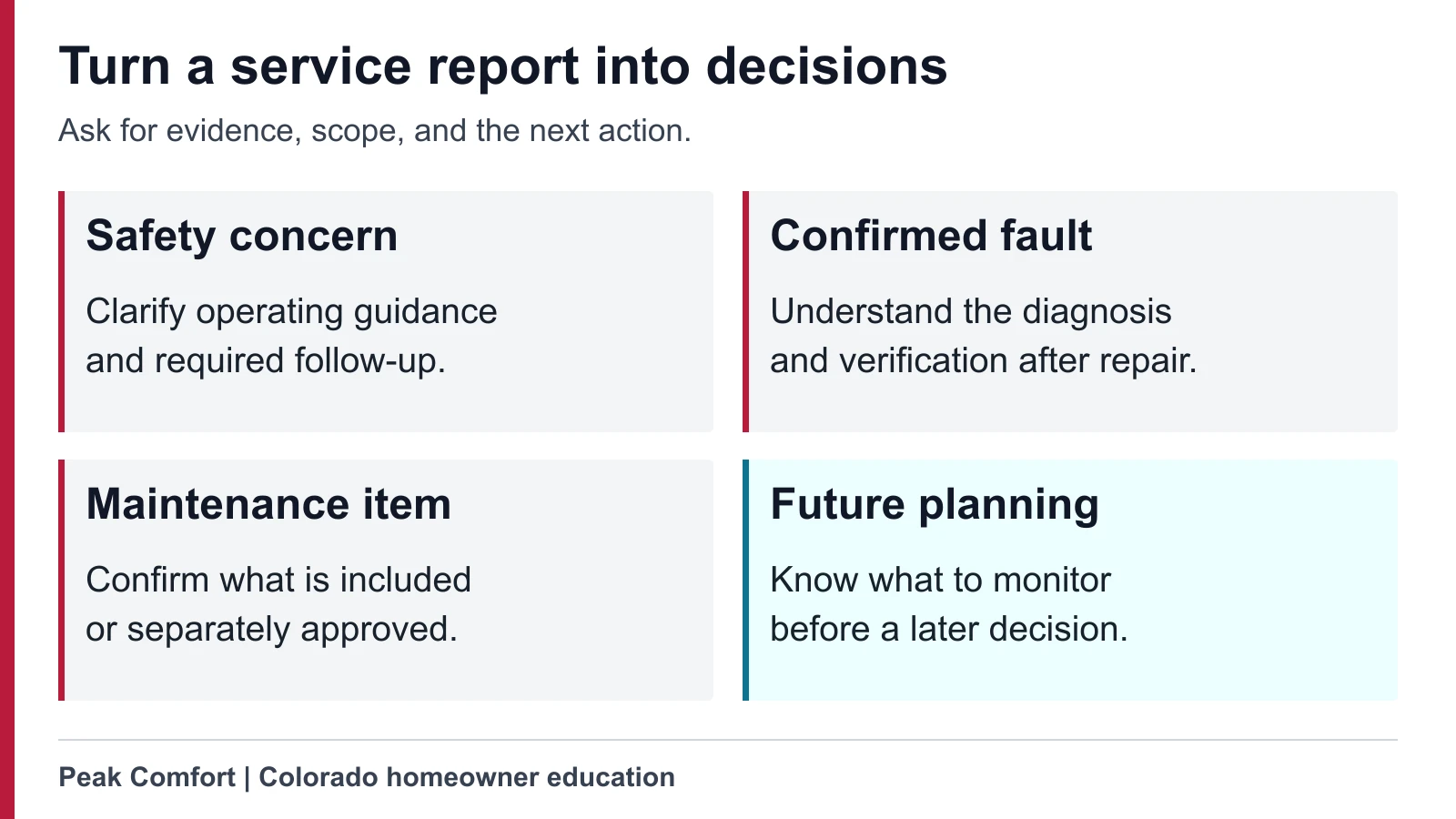
Sort the report into decisions instead of treating every recommendation as equally urgent.
- A safety concern: Ask what was found, what operating restriction applies, and what qualified follow-up is needed.
- A confirmed operational fault: Ask for the diagnosis, repair scope, and verification after repair.
- A maintenance item: Ask whether it is included now or should be scheduled separately.
- A comfort or design issue: Ask whether further testing is needed before equipment or duct changes are proposed.
- A future planning item: Ask what you should monitor and what would make the decision more urgent.
This approach keeps a service report useful. It also helps you avoid approving a replacement based only on an age estimate or an unquantified description of poor performance.
Does a tune-up certify that a furnace can never leak carbon monoxide?
No. A maintenance visit evaluates the equipment and conditions observed within its scope. It does not replace working alarms or guarantee future operation.
The Consumer Product Safety Commission's CO guidance recommends professional servicing of fuel-burning heating equipment and properly installed carbon monoxide alarms. Follow the alarm manufacturer's installation, testing, and replacement instructions.
If a CO alarm sounds, or you smell gas, leave the building and call emergency services or the gas utility from a safe location. Do not remain inside to troubleshoot the furnace, silence the alarm, or operate switches. A normal tune-up appointment is not the correct response to an active emergency.
Is a maintenance membership worth comparing?
It can be, if the included visits and benefits match your equipment and expectations. Compare the membership's written scope with the one-time visit you would otherwise purchase.
Check how additional systems are handled, whether repairs are separate, and what scheduling or other benefits actually apply. A home with two furnaces needs a different comparison than one with a single system.
You can review the Peak Comfort Protection Plan alongside our maintenance service. Use the current plan page for pricing and terms rather than relying on an older blog or a remembered promotion.
Questions to ask before booking furnace service
Should I book before cold weather arrives?
Preseason planning gives you time to evaluate findings and arrange follow-up. If a problem is already present, describe it when booking so the office can recommend a diagnostic visit instead of assuming routine maintenance is sufficient.
Is changing the filter a complete tune-up?
No. A filter change is an important homeowner task, but it does not evaluate combustion, venting, electrical components, controls, or the complete operating sequence.
Should every part be cleaned at every visit?
The appropriate work depends on condition, access, the model's instructions, and the purchased scope. Ask why a cleaning task is recommended and whether it is included before approving it.
What should I keep after the service?
Save the findings, relevant readings, work completed, items deferred, and recommended follow-up. Keep the equipment model and service date with that record so next year's visit can build on it.
Book for the result you need
A strong furnace tune-up gives you a clearer picture of the equipment's condition and a practical plan for any findings. Ask about the scope before the visit and the evidence behind recommendations afterward.
Peak Comfort helps Northern Front Range homeowners with heating service and repair. Request a furnace service appointment and tell us whether you need preventative maintenance or help with an existing symptom.
The cover is an original generated illustration. The graphics are a customer discussion framework, not a representation of a completed inspection.
About the Author
Morgan Shaffer
Co-Owner and HVAC Specialist, Peak Comfort
Morgan specializes in high-efficiency systems, heat pumps, and field-proven HVAC solutions for Front Range weather.
References
APA style citations for sources used in this article.