
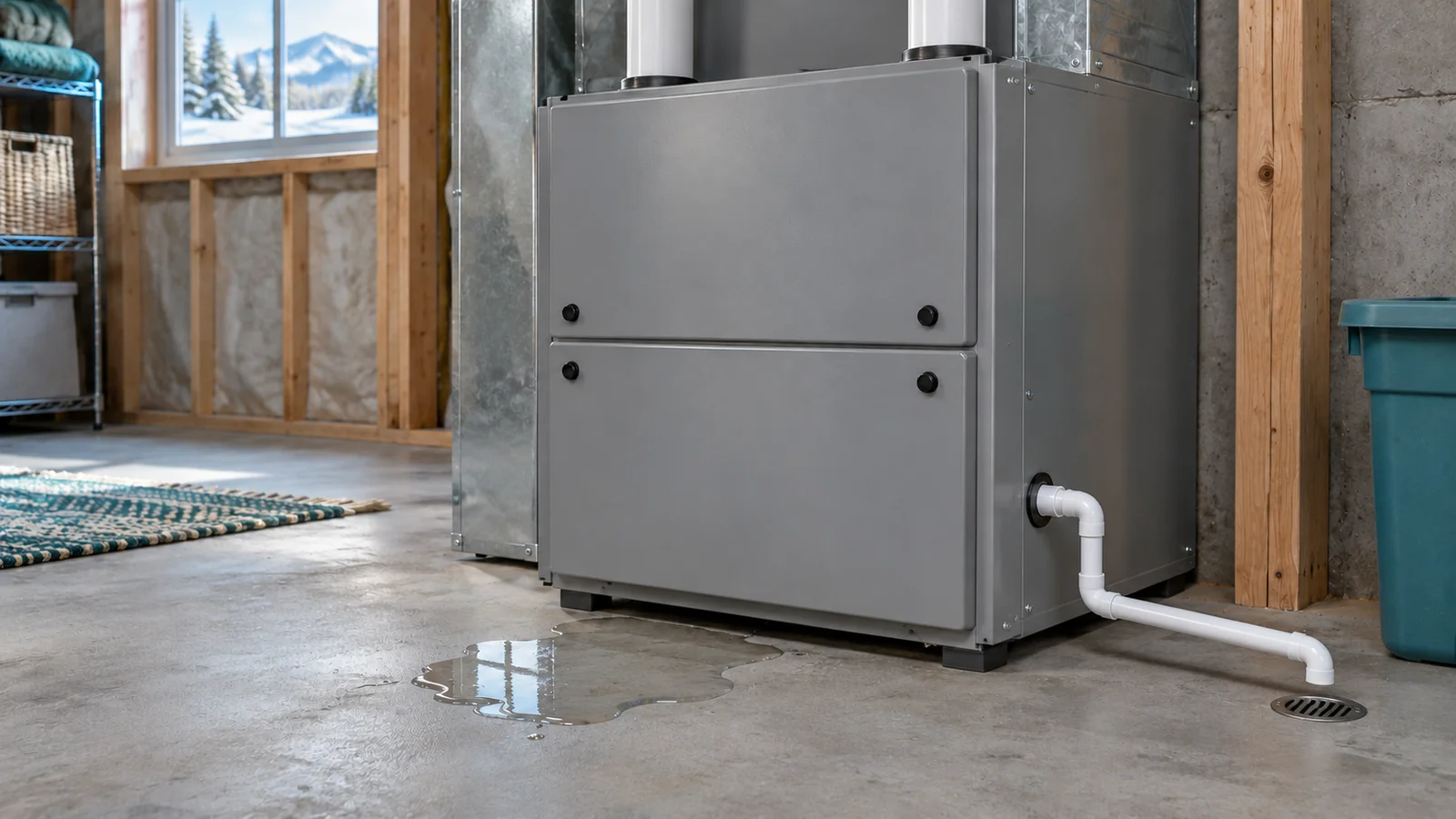
Why Is My Furnace Leaking Water in Colorado?
Water around your Colorado furnace? Learn how condensate, humidifiers, and nearby plumbing differ, what to do safely, and when to request heating repair.
A furnace leaking water in winter may have a condensate drain or pump problem, or a leak from an attached humidifier. Water can also come from nearby plumbing rather than the furnace itself. A condensing furnace makes water as part of heating, but that water belongs in its drainage system, not on your floor.
If there is a gas odor or CO alarm, leave and follow the emergency guidance below without operating any controls. Otherwise, stop the system at a safely accessible, dry thermostat and arrange a diagnosis rather than continuing to run it through an unexplained leak.
For homeowners in Longmont, Loveland, Fort Collins, and the surrounding Northern Front Range, a puddle beside the heating equipment raises two immediate questions: is it safe to approach, and is the heat still available? Start there, not with a drain-cleaning trick from the internet.
This guide is for safe observations and a more useful service call. It is not a procedure for opening a furnace or repairing its drainage.
What should you do first if water is near the furnace?
Keep clear if water may be touching electrical equipment. Do not reach across a puddle for a furnace switch, unplug a wet pump, or open a wet cabinet. If the thermostat cannot be reached safely, leave the equipment alone and explain the hazard when requesting help.
The Electrical Safety Foundation's water-damage guidance warns against handling breakers while standing on a wet surface and calls for professional inspection of water-damaged electrical equipment. Although that guidance addresses storms and flooding, the water-and-electricity precaution matters in a utility room too.
A gas smell or carbon monoxide alarm is a different situation: leave immediately. For a CO alarm, call 911 from outside; report a suspected gas leak to 911 or the gas utility from a safe location. Do not operate switches or stay inside to investigate the puddle. The CPSC carbon monoxide fact sheet explains that CO cannot be detected by smell. Follow emergency responders' instructions about returning inside. Water alone neither proves a combustion problem nor rules one out.
If you can observe from a safe, dry location, note whether the leak is active and whether heating has stopped. Tell the office about both water and loss of heat, rather than booking an ordinary tune-up without mentioning the problem.
Why does a furnace produce water when the heat is on?
A condensing furnace recovers additional heat from combustion exhaust. Water vapor becomes liquid during that process, and the condensate must drain away. That is different from room humidity settling on a window.
Carrier's furnace-leak guide identifies drainage blockages, pump problems, and humidifier leaks among the possible causes. A technician needs to establish where the water starts, not simply where it collects.
Do not assume the house needs a dehumidifier because the furnace area is wet. Our Colorado winter humidity guide addresses indoor moisture balance; an equipment leak is a separate repair question.
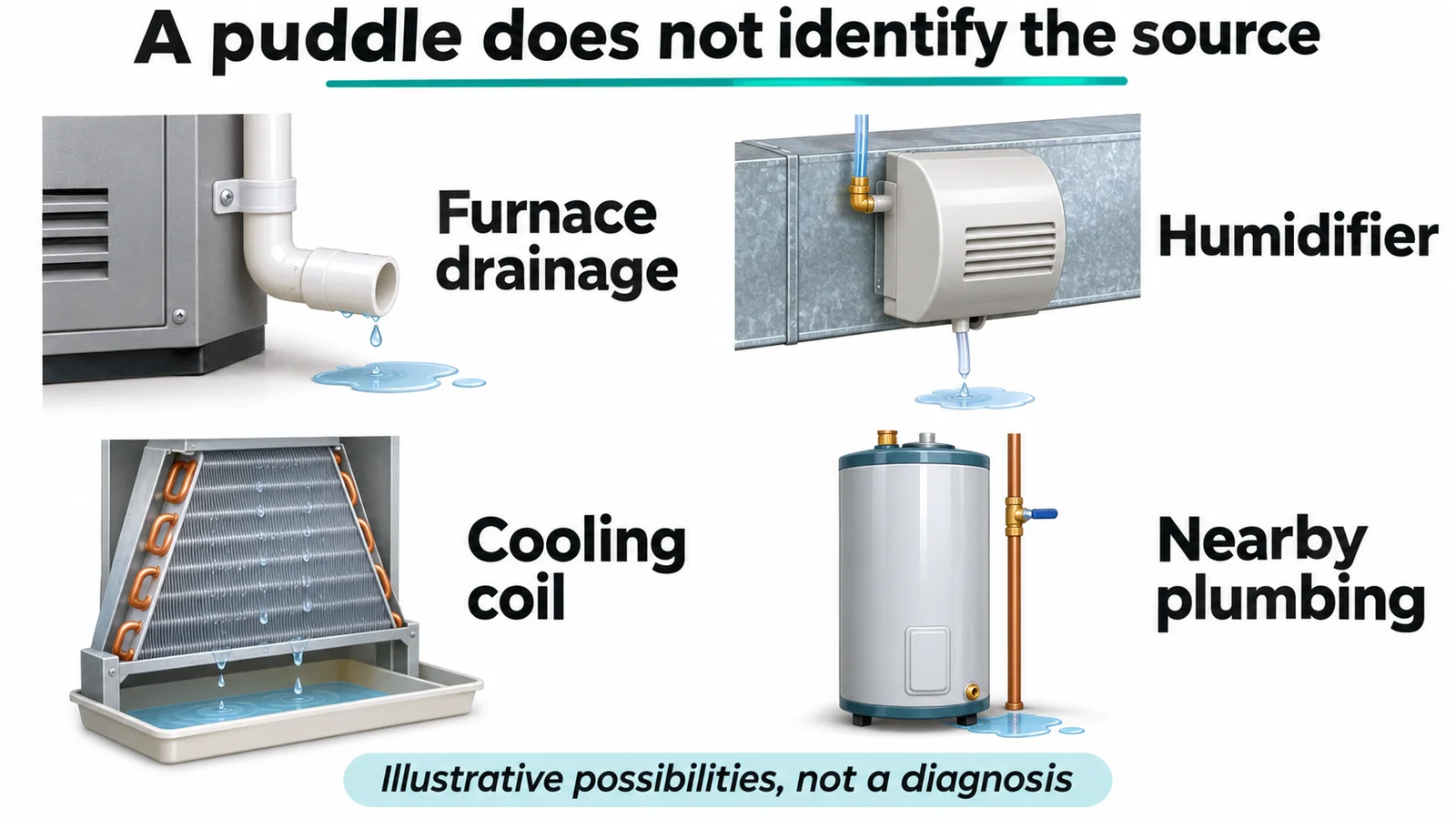
These are possible sources, not a diagnosis or a piping layout. A puddle's location alone does not identify the failed component.
Is the water actually coming from the furnace?
The equipment's operating mode is a useful clue. Trane's troubleshooting guidance distinguishes heating condensate, humidifier leaks, cooling-coil drainage, and water from other appliances sharing the room.
| What you notice | A possibility to investigate | What to report |
|---|---|---|
| Water appears while heating runs | Condensing-furnace drain or pump trouble | Heating mode, timing, and visible drip location |
| Moisture is near a duct-mounted humidifier | Humidifier supply, connection, or drain leak | Whether a humidifier is installed and where moisture is visible |
| Water follows air-conditioning operation | Indoor cooling-coil condensate or drainage trouble | Actual operating mode, even if the calendar says fall |
| Water extends from another appliance or pipe | Nearby water heater, laundry equipment, or plumbing | Where the wet area begins, if safely visible |
These observations help describe the call; they do not tell you which part to buy. If the problem follows cooling and visible ice, use our guide to a freezing air conditioner for that different situation.
What information helps when scheduling heating repair?
You do not need to identify the furnace model by removing a panel. A short description is more useful than a guessed diagnosis:
- Operating mode: Was the thermostat set to heat, cool, or off when you noticed water?
- Timing: When did you first see it? Did it appear after an ordinary heating cycle or while the system was idle?
- Location: Is moisture beside the cabinet, below a humidifier, near a pump, or coming from elsewhere in the room?
- Comfort: Is the home still reaching its set temperature, or is the indoor temperature falling?
- History: Has this happened before, and was any recent equipment work performed?
Take a photograph only if you can do so without approaching wet electrical equipment. An existing service invoice can supply model information without an extra trip into the utility room.
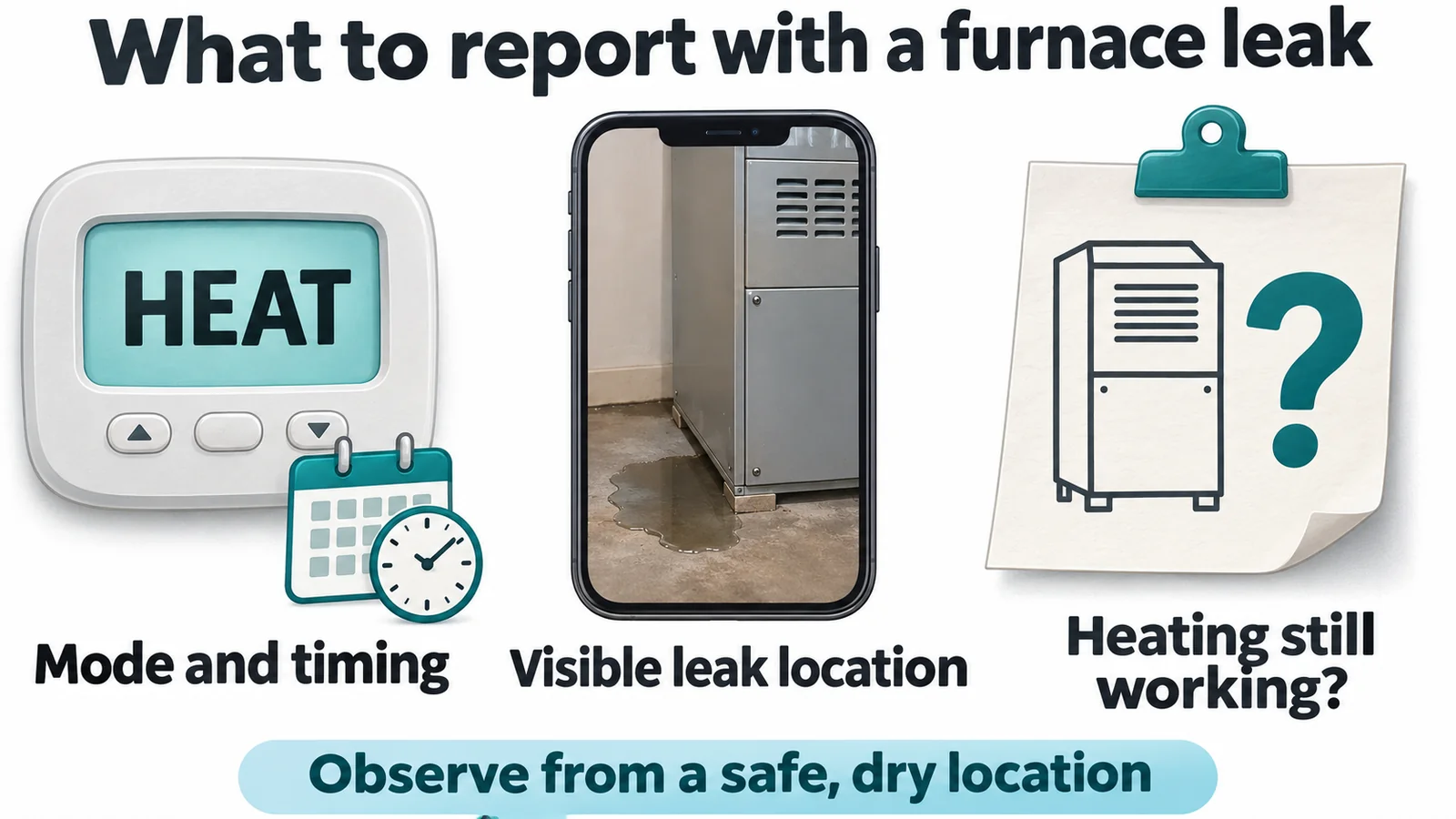
All three observations are listed above in text. Do not restart equipment to reproduce a leak for a photograph.
Should you clear the drain or keep resetting the furnace?
Leave internal drains, traps, pumps, safety switches, and combustion components to a qualified technician. Do not pour chemicals into an unidentified pipe, disconnect tubing, or bypass a switch to keep the heat running. The model's instructions and the actual cause should determine the repair.
Ask the technician to explain the water's source, what work corrects it, and how drainage and heating operation will be checked afterward. If a replacement furnace is proposed, ask why a repair is unsuitable. A wet floor by itself is not a replacement estimate.
What is the next step for a Northern Colorado home?
Treat the puddle as a symptom that needs a source, not proof of an expensive failure or permission to ignore it. Stay clear of electrical hazards, stop operation only from a safe location, and describe both the leak and the home's heating status.
Peak Comfort provides furnace repair and heating service on Colorado's Northern Front Range. Request help with water around your furnace or call (720) 897-1906. Tell us where you are located, whether heat is working, and whether water may be reaching electrical equipment so we can discuss the appropriate next step.
The cover and both explanatory images are original generated illustrations, not photographs of a Peak Comfort customer installation. They are not installation instructions.
About the Author
Morgan Shaffer
Co-Owner and HVAC Specialist, Peak Comfort
Morgan specializes in high-efficiency systems, heat pumps, and field-proven HVAC solutions for Front Range weather.
References
APA style citations for sources used in this article.
- Baugh, T. (2026, October 13). Furnace leaking water: Causes, signs, and solutions. Carrier. Source
- Fonda, A. (n.d.). Why is my furnace leaking water? Trane. Source
- Electrical Safety Foundation International. (2019, April 16). Electrical safety during natural disasters. Source
- U.S. Consumer Product Safety Commission. (n.d.). Carbon monoxide fact sheet. Source