
Heat Pump Steam and Ice in Colorado: Normal Defrost or a Repair Problem?
Published October 8, 2026. Added to our weekly archive for the date shown above. Guidance and sources were checked at publication.
Learn which heat-pump frost, steam, fan changes, and cool-air symptoms can be normal in Colorado, and when persistent ice or lost heating needs service.
Light outdoor-coil frost, a brief vapor plume, or a temporary change in fan operation can be normal during a heat pump's defrost cycle. Persistent heavy ice, repeated failure to clear it, or a home that is losing heat needs professional attention. Judge the sequence and recovery, not one photograph.
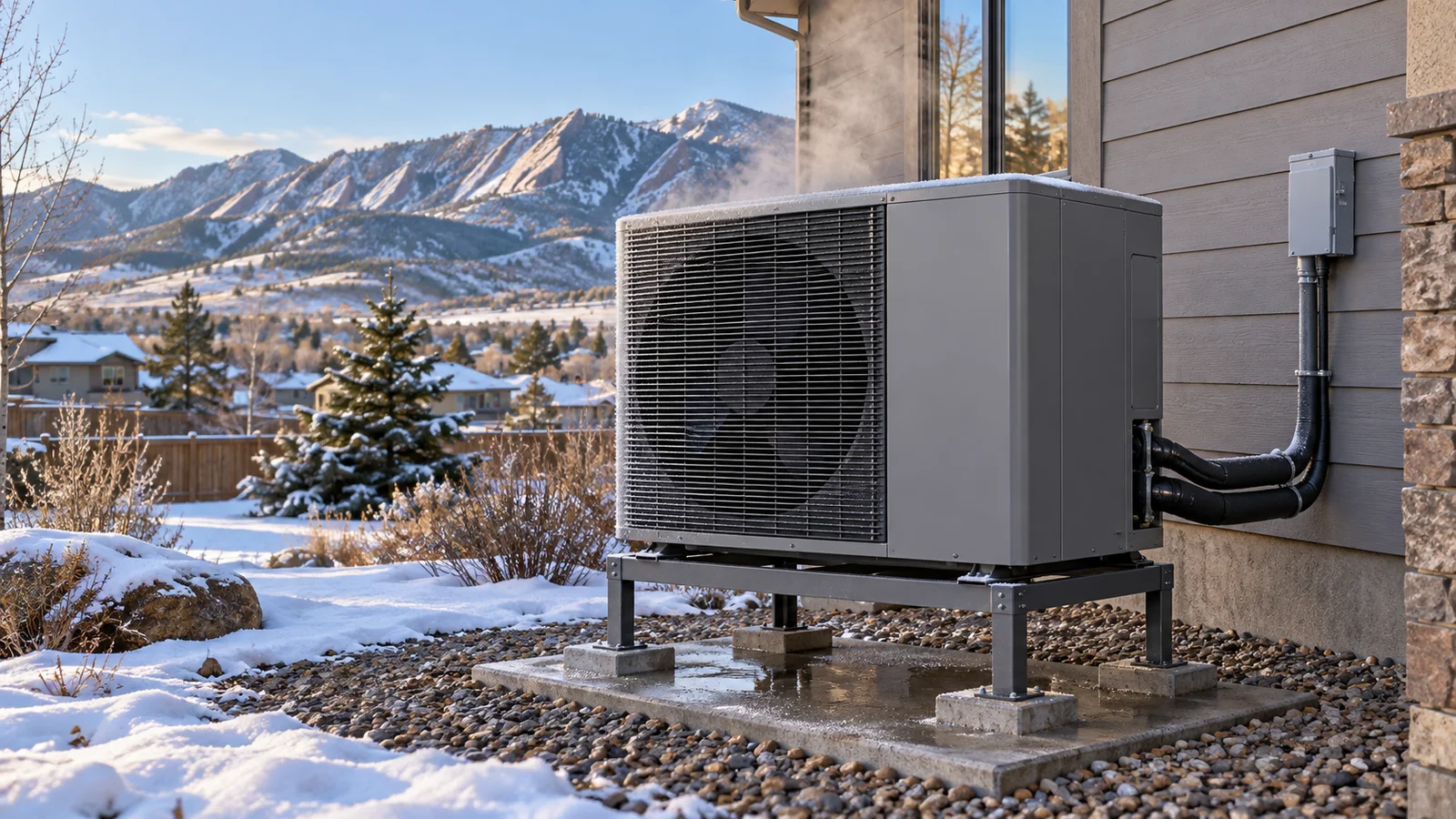
For a Colorado homeowner using a heat pump through the first cool, damp mornings of fall, defrost can look unfamiliar. A unit that normally blows air steadily may pause its outdoor fan, change sound, and release visible vapor. That does not automatically mean it is smoking or breaking down.
This guide explains what to observe safely. For the broader question of heating performance, see our Colorado winter heat-pump guide. For ice during summer cooling, use the separate frozen-AC troubleshooting guide.
Why does a working heat pump collect frost?
In heating mode, an air-source heat pump draws heat from outdoor air. Its outdoor coil can be colder than the air around it. With sufficient moisture and the right coil temperature, frost can form even when the reported outdoor temperature is above freezing.
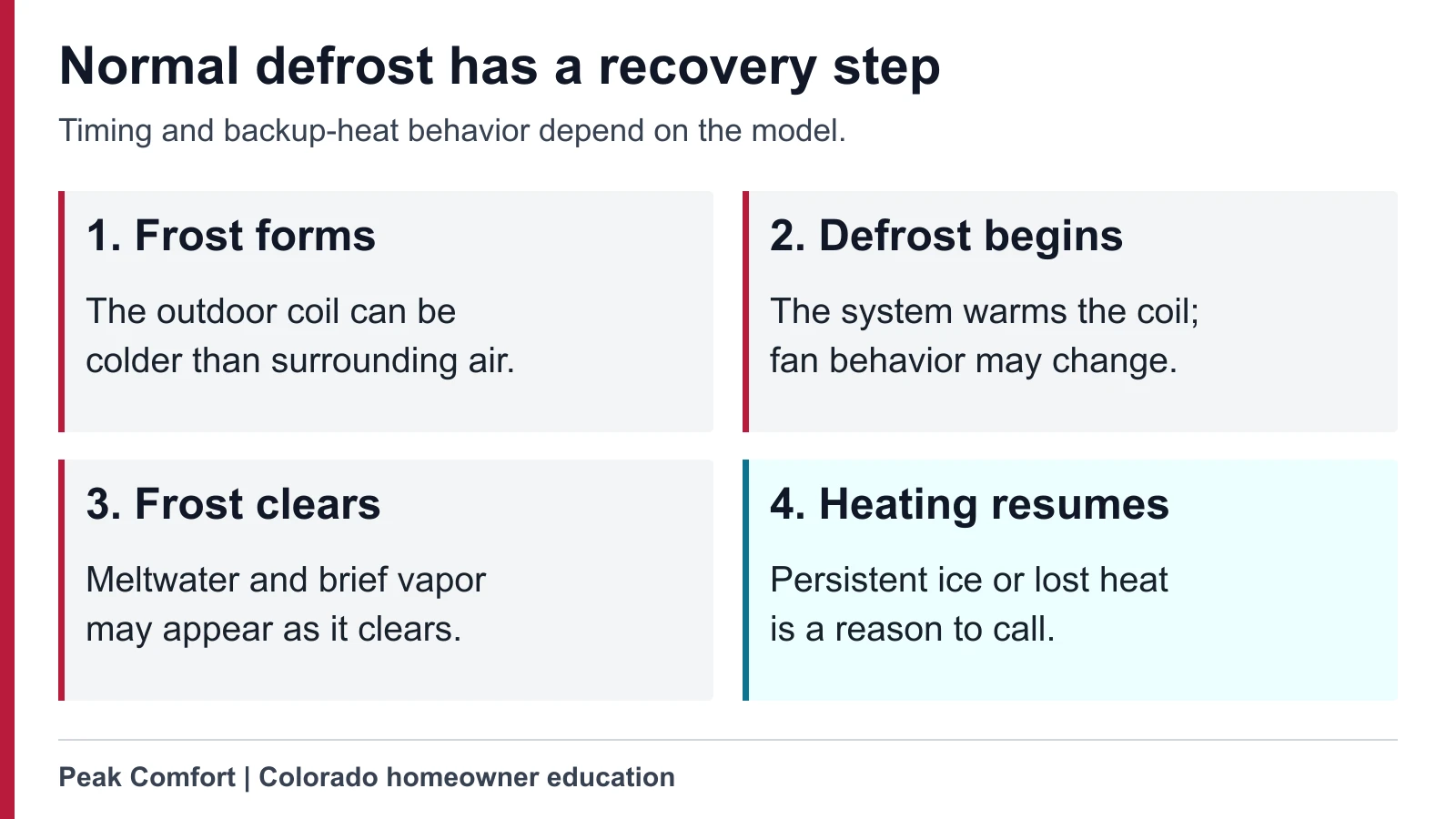
Trane's defrost explanation describes reversing refrigerant flow temporarily to warm the outdoor coil and clear frost. The system then returns to heating.
That makes frost management a normal part of operation, but not a reason to ignore any amount of ice. The important distinction is whether the system clears the frost and returns to its intended heating behavior.
What can normal defrost look and sound like?
Depending on the equipment, the outdoor fan can pause and the sound can change. A small cloud of vapor may appear as frost melts. Indoor delivery can change temporarily, and the backup-heat response depends on the installed system and controls.
Use the owner's manual or installer handover to learn what is normal for your model. Do not assume every unit uses the same timing, sensors, backup heat, or fan sequence.
| Observation | Can be part of normal operation | Reason to arrange service |
|---|---|---|
| Light frost on the outdoor coil | Frost forms, clears, and heating resumes | Ice persists or grows across cycles |
| Brief wispy vapor | Appears during frost clearing and dissipates | Smoke, burning odor, or uncertain abnormal discharge |
| Outdoor fan pause or changed sound | Temporary model-specific defrost behavior | Fan remains stopped when it should be operating |
| Temporary cooler indoor air | May occur depending on backup heat and controls | Sustained cold air or falling indoor temperature |
| Water around the outdoor unit | Meltwater can leave the coil during defrost | Drainage refreezes into an obstructing ice mass |
If you suspect smoke or an electrical burning condition, keep away from the unit and get urgent help. Do not assume any visible plume is harmless steam simply because this article discusses defrost.
How long should you wait before deciding something is wrong?
There is no universal waiting period for every heat pump. Follow the model's operating guidance, and look for successful recovery rather than using an arbitrary timer.
For a useful observation, note when the unusual behavior began, whether the frost cleared, and whether heating returned. If the unit stays heavily iced, the indoor temperature keeps falling, or repeated cycles do not restore operation, call for service.
Keep comfort and safety in the decision. You do not need to stand outside watching an uncomfortable house get colder just to collect a perfect record. If you are unsure whether the equipment is behaving normally, contact the service provider and describe what you can observe.
What should you check outside before winter?
Look from a safe distance for loose leaves, drifting snow, or objects that restrict the outdoor unit's airflow. Follow the manufacturer's clearance requirements rather than a single internet rule. Do not cover a heat pump that is operating in heating mode.
Also look at where water can go. A heat pump beneath a roof drip line or beside a place where snow is shoveled can experience conditions quite different from the forecast. Tell the contractor if meltwater refreezes near the base or if the unit is regularly buried after clearing a walkway.
Do not chip ice from the coil, use a heat gun, pour boiling water over it, or remove panels. Leave coil, refrigerant, sensor, and electrical work to a qualified technician.
Carrier's troubleshooting guidance recommends checking ordinary settings, the accessible filter, and outdoor obstructions, while arranging professional diagnosis for symptoms that remain. Repeated breaker trips are also a reason to stop resetting and seek help.
What if the vents feel cool while the thermostat says heat?
Start with the ordinary mode and fan settings, without changing installer configuration. Fan-only circulation, a temporary defrost period, and a genuine heating fault can all feel different at a register.
Carrier's not-heating guide identifies thermostat settings, airflow, and system operation among the checks. The customer's most useful question is whether the house is reaching and maintaining its target, not whether supply air feels identical to a gas furnace.
For a dual-fuel installation, ask the contractor to explain which heat source should operate during and after defrost. Do not assume a gas furnace must fire whenever you see vapor. Our dual-fuel control guide explains why the equipment's approved sequence matters.
What information makes a heat-pump service call more useful?
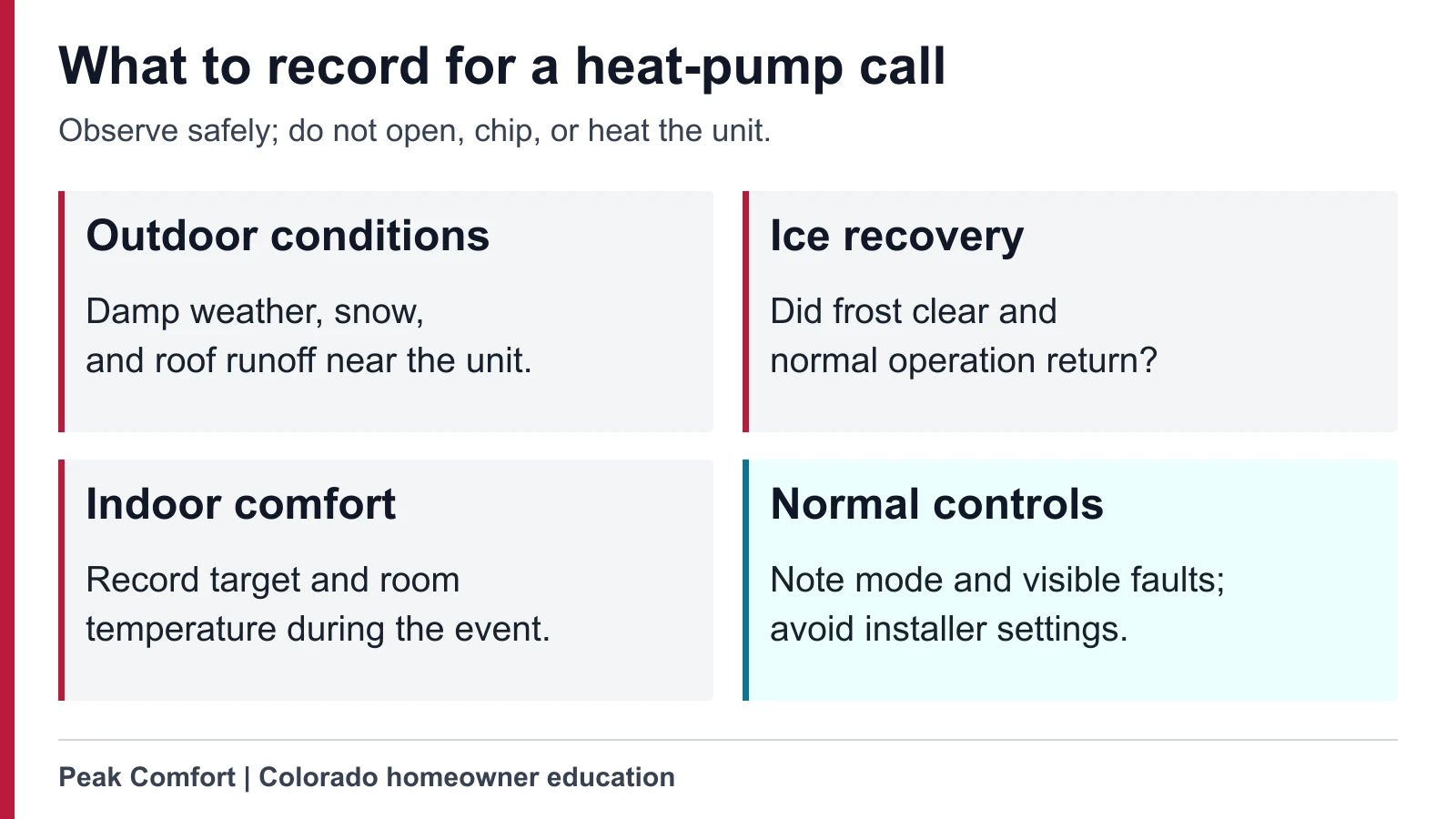
Keep a short record of the event, if it is safe to do so:
- Approximate outdoor conditions, including damp weather, snow, or roof runoff.
- Normal thermostat mode, setpoint, and room temperature.
- Whether frost cleared and heating resumed.
- Whether the outdoor fan behavior returned to normal.
- Any fault message visible on the normal control display.
- A photograph or short video taken without opening or touching equipment.
Include whether this is new behavior, whether the system is newly installed, and whether recent work changed controls. Avoid cycling power before the call unless instructed for a specific reason. Original operating or fault information can help diagnosis.
Ask the technician to explain the confirmed issue and the verification after any repair. A component name without an explanation of the observed failure is not enough to help you understand the result.
Questions about defrost in Colorado
Does the outside temperature have to be below freezing?
No. The outdoor coil can be colder than the surrounding air. Frost formation depends on coil conditions and moisture, not simply the weather-app temperature.
Should I switch to emergency heat whenever I see frost?
Do not use emergency heat as a routine response to normal defrost. The purpose and correct use of that setting depend on the installation. Ask the service provider if the system is failing to heat.
Is solid ice around the whole unit normal?
Persistent heavy ice or ice obstructing airflow needs attention, particularly when normal clearing cycles do not resolve it. Do not attempt to break it off yourself.
Does defrost mean the heat pump is unsuitable for Colorado?
No. Defrost is an operating function. Suitability depends on the selected equipment, the home's load, placement, installation, and controls. Repeated abnormal behavior needs a diagnosis rather than a blanket conclusion about the technology.
Learn the normal sequence, then watch for recovery
The useful distinction is whether the heat pump clears frost and restores heating. A brief change can be normal; persistent ice or lost comfort should be checked.
Peak Comfort provides heat-pump installation and service across Colorado's Northern Front Range. Request a heat-pump service visit if your unit remains iced, does not recover, or is failing to keep the home comfortable.
The cover is an original generated illustration. The graphics show a general sequence and observation checklist; your model's instructions determine its operation.
About the Author
Morgan Shaffer
Co-Owner and HVAC Specialist, Peak Comfort
Morgan specializes in high-efficiency systems, heat pumps, and field-proven HVAC solutions for Front Range weather.
References
APA style citations for sources used in this article.